


According to the State of AI in Business 2025 report by MIT NANDA (July 2025), AI pilots constructed with an outside implementation partner showed a higher observed deployment rate than internally built pilots in a self-reported study of 52 organizations, a sample size the report's own authors flag as a limitation. The data reflects an observed association. The report does not establish a causal mechanism. Even so, the pattern is consistent with a broader point who you choose as your AI development company for your business matters more than the most businesses realize when determining whether their AI project will actually ship.
This guide will outline the things you need to actually assess when selecting an AI development company, the questions you need to ask that will help you determine whether you're dealing with an actual delivery partner or a demo hound, and how to check for claimed results, rather than take a pitch deck on its own word.
Key Takeaways
- According to MIT NANDA's 2025 Report, a self-reported, 52 organization interview does study that the authors themselves flag as limited in scope observed a higher deployment rate for vendor partnered pilots than for internally built ones. The association is worth noting when selecting a partner, but the samples constraints mean it should not be read as establishing a casual relationship or a universal finding.
- Vendor selection is a process question, not just a capability check. The evaluation process you run before signing is as consequential as the technology itself
- Request a reference that is specific to a project outcome that you can verify through direct space conversation not a case study on the vendors own site which is vendor-reported information. A listing on a review platform such as Clutch confirms that there are third-party reviews, but doesn't necessarily confirm that the company has actually achieved the results stated.
- The best indicator of fit is not years in business or size of company, it's the ability to explain, in detail, how the company would do a specific project differently than a generic project.
Criteria For Choosing An AI Development Company
Choosing the right AI development company because most failures in AI projects unclear scope, Insufficient data readiness, or a gap between promised and actual deliverables are largely independent of which model is used which means the partner selection process is where the risk is managed. The data from MIT NANDA 2025 Shows an observed association between outside partners and higher deployment rates, The reports authors note that variation in AI maturity across organizations is a likely contributor alongside any process advantages a structured external engagement may carry. It doesn't have to be any one AI development company or the hiring of one that means success, it's the evaluation process you go through before you sign that is as important as the technology itself.
What Does One Look For In An AI Development Company?
A documented discovery and data readiness assessment
When speaking with any provider of AI development services, ask them to explain the process they take to discover a problem and put out a specific problem statement, and confirm whether or not the data you have exists at all as a basis for the feature being proposed as an AI solution. Any company that bypasses this step and quotes a build estimate is not quoting risk profile, it's quoting hours.
Evidence of a narrow, proven pilot approach.
A viable AI solutions company suggests beginning with one pilot, and one well-defined pilot at that, and not an enterprise-wide deployment from the get-go. Then ask what type of pilot scope the company would suggest for your application and why; if its response is vague, then it's a sure sign that the company hasn't considered your project.
Establish a technical fit with your particular AI requirement.
Not every AI Software Development Company is the same, and some can specialize in Generative AI and LLM-based features, while others in Computer Vision, others in Data Engineering and MLOps, and so on. If the AI ML development company can tell you clearly what their technical niche is and how it relates to your use case that's a sign of experience that is relevant to you, and not a pitch for the ability to do anything but any project that comes along.
IP ownership, data rights, licenses, and post launch support in writing
before signing, confirm four distinct terms in writing. First IP ownership, who holds the right to custom model weights code and architecture bills specifically for your project. Second, third-party licenses which components are built on open source or licensed frameworks and what restrictions those licenses carry after the engagement ends. Third, data rights, who may retain use or retrain on your training data once the project closes. Fourth, post launch support, whether the same delivery team remains responsible for model drift monitoring and retaining, and on what commercial terms since AI capability degrades silently when no one watches it after deployment.
Evidence of the project, not a portfolio page
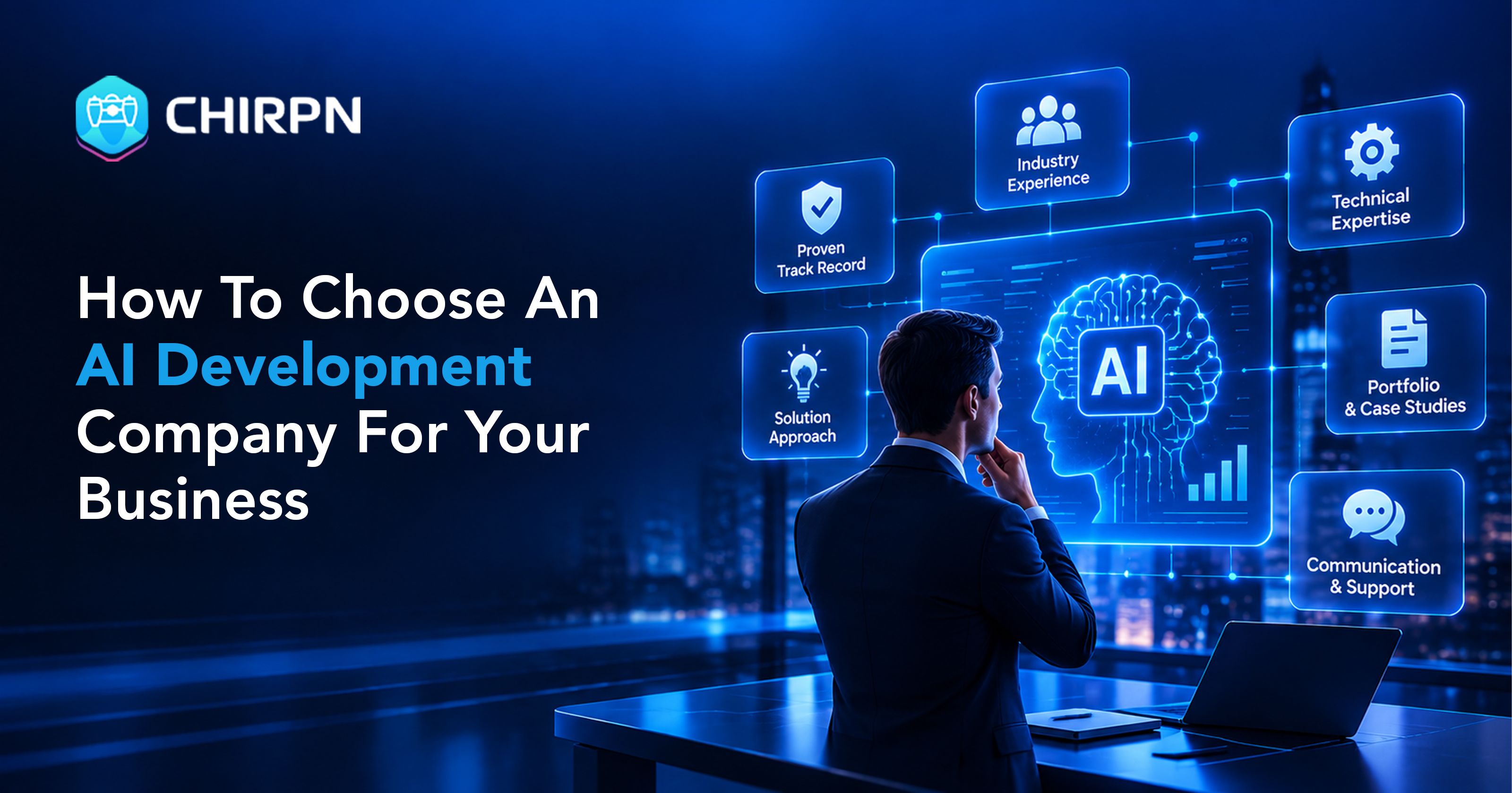
Request a reference that refers to a specific named project outcome and is able to speak with a person about not a general capability claim. Being a case study on a vendor's own website is vendor-reported information that may be useful as context but is not independently verified, while a listing on Clutch or GoodFirms only tells you that a company is reviewed by third parties, not that a specific project resulted in a specific outcome.
What is the difference between an AI Consulting Company and an AI Development Company?
An AI consulting firm recommends strategy and roadmap, the AI use cases to pursue and the order, while an AI development firm is responsible for developing and shipping the feature. In reality, it's not a question of the labels a company uses, it's whether or not it remains involved throughout the strategic process of recommending and the actual development process of building. If a business is using a consulting-only firm to develop the strategy, and a separate development-only firm to build, then the business must Manage the coordination gap between the two firms which becomes an additional layer of risk that the MIT NANDA data associates with lower observed deployment rates, though the data does not isolate this as the sole cause natural.
Questions To Ask Before Signing For A Software Development Project
In addition to the five criteria listed above, some direct questions will frequently emerge that reveal the omissions from a sales pitch. Give the company the chance to compare your use case with a standard one. A good response here indicates that the company has thought through what it would do for your project as opposed to a standard version of the same request. If the company is considering larger projects, ask how the pilot is being deemed a success; “it went well” is not a measure. Ask directly what will happen if the pilot doesn't work out, and look for a company that has an honest answer to this question, instead of one that says “that won't happen.”
Choosing the Best Software Development Company for Your Project
AI development projects are not all alike and it's why comparing all AI development companies together is part of the reason for wrong comparisons. The best place to look for an AI app development company is a firm with prior experience in a particular type of app, such as a mobile or web app, where the logic works within a smaller, lag-sensitive interface than an enterprise data infrastructure.
A company developing a project involving large amounts of data, let's say it's a Fraud Detection, a Demand Forecasting, a big Document Processing, or some other data-heavy project is a more appropriate fit for an AI ML Development company with a rich experience of data engineering and MLOps. The only way to compare AI development companies against one another is to first understand the type of AI work your project entails; even if a company sounds great in their marketing language, they may not be qualified to work in other areas of AI.
This is where it pays off right away to ask for category specific evidence. For an AI app development company, this should be attainable with a “shipped” feature that is AI-based and not just a backend AI capability that it developed for another type of client and vice versa when it comes to data-heavy enterprise work. Don't take the "that's not really our specialty, but here's another somebody who does that well" comment as a negative sign, however: it's a sign that the company is telling the truth about fit rather than accepting any job that walks through the door.
Don't Miss Red Flags When Selecting AI Development Company
There are a few particular patterns that should be considered real warnings, not just simple conflicts. When a proposal contains no discovery phase whatsoever, but is just a fixed price off the shelf, then it's likely that the company is estimating from a template and not from the project you are proposing.
One common and expensive bait and switch is senior management Present at the pitch meeting, but absent from the delivery team since you got the principles during the sale and junior for the actual build. A company that doesn't include ownership and/or post-launch support terms in a verbal agreement before you sign is asking you to take their word for them, and for the most detrimental terms that will most likely result in a dispute later.
How Long Should the Evaluation Process Take?
One of the more common reasons that a company goes with the wrong AI development company is that they rush through the evaluation process to save a few weeks, but they end up going with the wrong option, thus defeating the purpose of trying to rush through the evaluation process. The reasonable evaluation is to talk to two or three shortlisted companies, ask them the same set of questions that you were asking above, and compare the responses to the questions, not evaluate each pitch individually and go with the last one you spoke to. This doesn't have to be over a period of months but rather within a brief window of two to three weeks it can reveal real differences between potential candidates, as long as you are probing them with consistent, specific questions and refrain from letting each company establish its own pitch parameters.
You should also review your list after the initial round of meetings, as the questions above often bring up new ideas that you didn't consider initially. A company that specializes in exactly your use case may not have been on your initial list, and the evaluation process itself might be the one that makes you realize it.
Frequently Asked Questions
Why do vendor partnered AI pilots show higher deployment rates than internally built pilots in some studies?
MIT NANDA's 2025 study self reported 52 organization sample observed a higher deployment rate for vendor partnered pilots then for internally built ones. The report authors Note that variation in AI maturity among organizations Is a likely contributor to this pattern not just differences in build method. The data reflects an observed association, it does not establish a single causal mechanism.
What questions should you ask before signing with an AI development company?
Questions include but are not limited to what it would do differently for your project as opposed to a generic project, how it would measure pilot success prior to expanding, who it would consider the owner of the resulting IP and model, and whether or not the same team would maintain engagement post-launch. Any of these vague or generic responses count as a warning sign.
What are the differences between an AI consulting company and an AI software development company?
An AI consulting company might work on strategy and prioritize use cases, and an AI development company is responsible for creating and releasing the feature but many firms do both. A more significant question would be, will one company/team be involved in both phases or will it be split between two companies/teams, which leaves a coordination gap?
How to check if an AI development company has its client results?
Always use vendor-provided information from a company's website, not a case study; request a reference related to a specific named project that you can discuss. A Clutch or GoodFirms listing doesn't guarantee that the outcomes that a company promises after a listed engagement have actually been achieved – it only confirms that third-party reviews exist.
Why Chirpn
Chirpn's AI and ML development services combine AI Discovery & Strategy services with AI Product Development & Delivery in one engagement keeping space strategy and build within a single delivery team, which removes the coordination layer that arises when those phases are split across separate firms. Chirpn is not just a marketing credential; it is a Google Cloud Partner equipped with access to Vertex AI and Gemini, leveraging these tools in client-facing builds. Chirpn has also released its own 5-signal framework for rating software product development companies, so much a self-rating against these signals is vendor-reported information, it should be treated as such and included alongside any other company you're rating.
When considering an AI development company in USA for a particular project, contact Chirpn, run it through the above discovery and evaluation processes and see if the project fits their expertise.