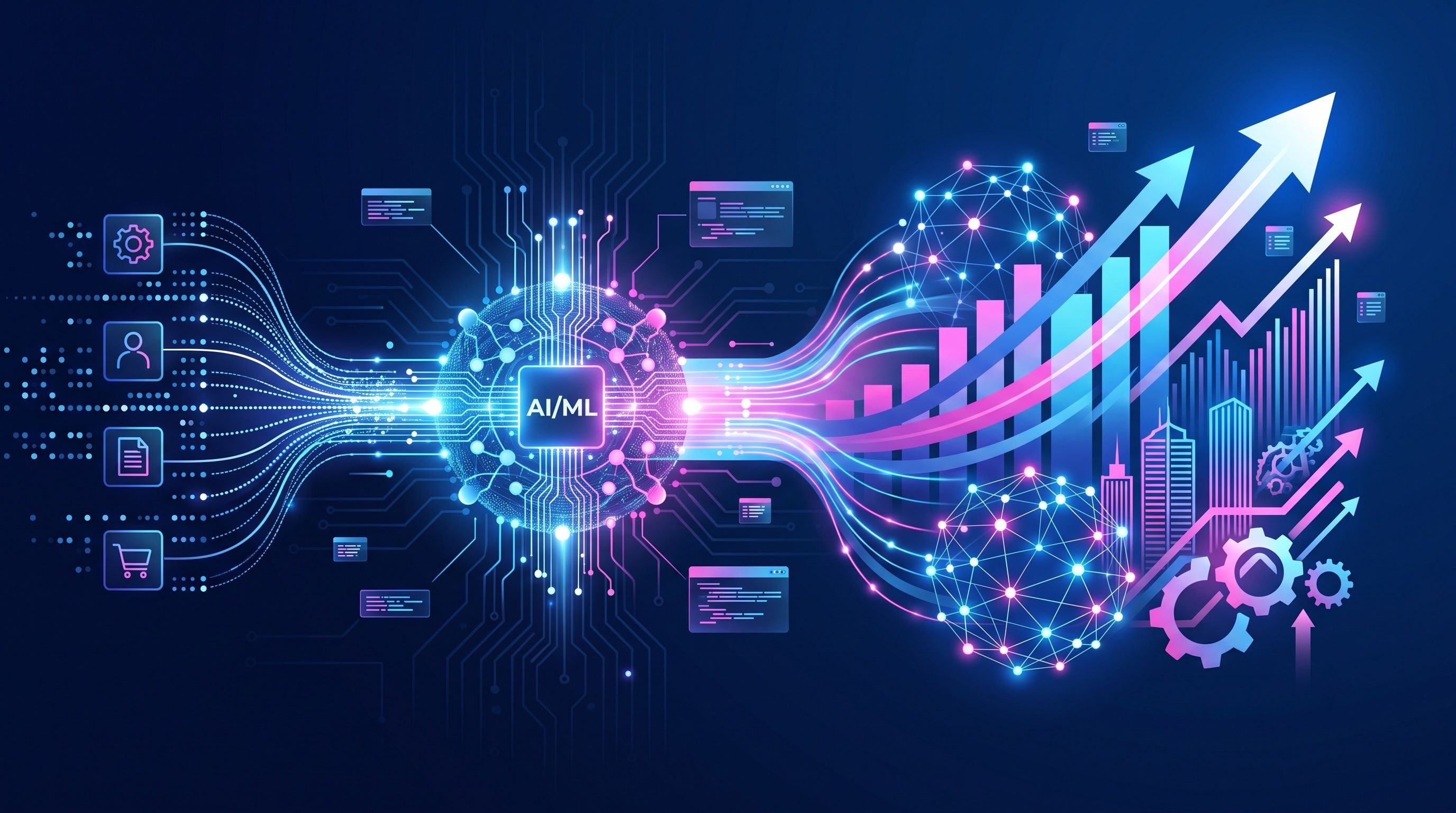


The US AI software market is projected to reach $106 billion in 2026. The companies capturing most of that value are not the ones spending the most on AI, they are the ones that chose the right delivery partner and moved from evaluation to production before their competitors finished procurement.
What to Look for in a Top AI Development Company in USA
PwC's 2026 AI enterprise research identifies three capabilities that consistently separate leading providers offering AI Software Development Services: MLOps-vs-LLMOps depth (firms that can operate large language models in production, not only deploy them), genuine cloud credentials (certified partnerships with recent production deployments, not badges), and governance-first architecture (AI TRiSM audit logging, role-based access, compliance frameworks built in, not retrofitted).
The Five-Point Selection Checklist
1. MLOps and LLMOps capability. Ask: how do you handle model drift, and what does your retraining cadence look like at our expected data volume?
2. Verified cloud credentials. Chirpn is a Google Cloud Partner (Vertex AI, AgentSpace, Agent Assist, Gemini) , a specific, scoped claim confirmed from the Chirpn website. Not "partnerships with the biggest cloud providers" one verified partnership stated precisely.
3. Fixed-scope prototyping. A firm that cannot scope a fixed-price prototype has not delivered one before. The prototype should be built on the production infrastructure, not a throwaway demo stack.
4. Named vertical clients with measurable outcomes. Named clients, specific problems solved, quantified results, reference calls available. A firm with three verified case studies in your industry is more valuable than one with two hundred projects spread across unrelated domains.
5. Governance-first architecture. AI TRiSM is an engineering requirement for any AI system deployed in a regulated or customer-facing environment in 2026, not a framework to consider after the build.
Where Chirpn Fits as a Custom AI Development Company
Chirpn is an AI ML Development Company and Google Cloud Partner serving US mid-market and growth-stage clients. AutoPATH runs all five SDLC phases in parallel requirements, design, code generation, QA, deployment which is how production AI systems ship in 45–60 days from signed contract. Full IP transfers to the client. No licence fees. No vendor lock-in.
How to Choose: Three Questions
1. Building or integrating? A greenfield AI product needs an AI-native product engineering firm. Adding AI to existing enterprise systems at scale needs a managed-services firm with strong integration practice.
2. What is your real timeline? A 45–60 day production deployment is achievable with an AI-native partner and a well-scoped brief. A 3–12 month timeline is the norm for a conventional delivery model.
3. What are your governance requirements? Healthcare, financial services, and legal verticals require AI governance frameworks that not every AI Development Company has built into their standard delivery process. Confirm before shortlisting.
Frequently Asked Questions
What is the best AI Development Company in the USA in 2026?
There is no single best, only the best fit for your stage, timeline, and budget. For Fortune-500 enterprise transformation: TCS, Infosys, Accenture. For mid-market and growth-stage buyers needing production AI in 45–60 days: Chirpn. For engineering-led product development at mid-tier scale: EPAM or Persistent Systems. Apply the five-criteria checklist before shortlisting.
How much do AI Development Services cost in the USA?
A proof of concept: $20,000–$50,000 over 4–8 weeks. A production AI feature: $50,000–$150,000 over 6–16 weeks. A full AI platform: $150,000–$500,000+ over 3–9 months. India-based delivery partners with US account management offer 55–70% cost savings without the quality trade-off.
How do I verify an AI company's credentials?
Three things: confirm cloud partner status directly on the vendor directory; ask for a named client reference in your vertical and take the call; and ask for the elapsed time from signed contract to production deployment on the last comparable project not demo, production.