


When a new project begins, one of the first decisions is which software development methodology to use. The choice is rarely obvious; each project brings different requirements, timelines, client expectations, and degrees of uncertainty and the wrong choice creates friction that compounds through every subsequent phase of delivery.
A software development methodology is a structured approach to organising all the work involved in building software. It should not be confused with project management models or specific technical strategies, though the terms are often used interchangeably in practice.
Two methodologies dominate the industry:
Waterfall: The traditional sequential model, in which each phase of development is completed before the next begins.
Agile: A modern, iterative approach derived from Rapid Application Development, typically implemented using Scrum.
Both have been tested and proven effective in the right contexts. The question is not which is better in the abstract it is which is right for your project.
The Waterfall Framework
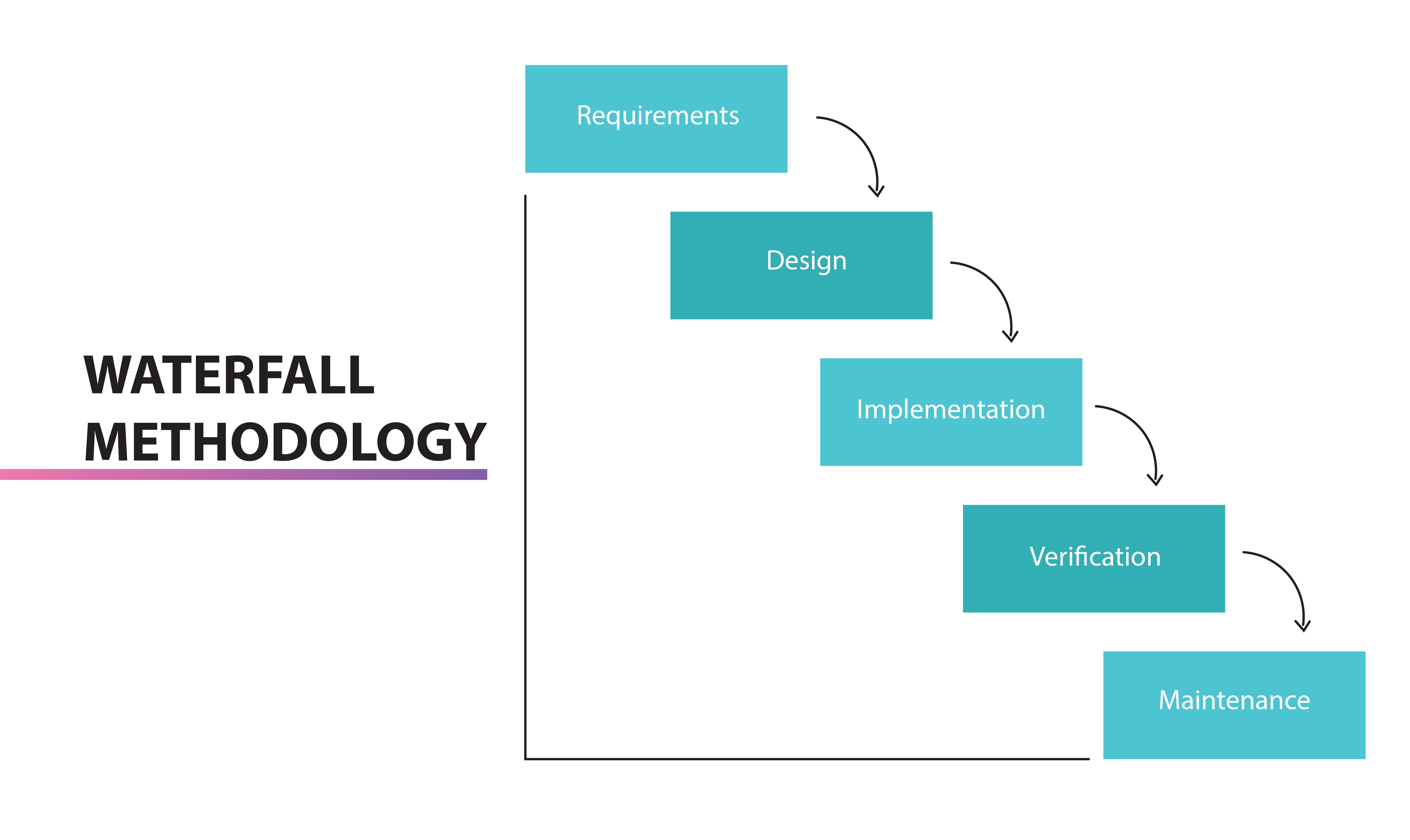
Waterfall uses a sequential approach to software development. A typical project progresses through the following phases in order:
- Gathering and documenting requirements
- Creating architectural design
- Coding and unit testing
- System testing
- User acceptance testing (UAT)
- Fixing arising issues
- Releasing the final software product
Each phase is a discrete period within the development lifecycle, with defined review and approval checkpoints between phases. The client confirms requirements before design begins; design is finalised before development starts. This structure makes Waterfall most suitable for projects where requirements are well-defined and unlikely to change significantly.
Benefits of the Waterfall Model
Consensus on Deliverables: Stakeholders and developers agree on requirements at the outset, simplifying planning and design.
Measurable Progress: A predefined scope makes progress tracking straightforward; each completed phase is a clear milestone.
Team Flexibility: Team members can work in parallel across phases business analysts can draft requirements while developers focus on other work and testers prepare test scripts alongside coding.
Reduced Ongoing Client Involvement: After the requirements phase, client interactions are limited to reviews and approvals, which suits clients with limited availability for continuous engagement.
Synchronised Design Effort: Early completion of designs enables multiple software components to be designed and integrated concurrently with external systems.
Holistic Software Design: Full visibility of all deliverables from the start supports robust architectural design, avoiding the fragmentation that can result from iterative code integration.
Downsides of the Waterfall Model
Requirements Complexity: Capturing comprehensive, unambiguous requirements up front is difficult. Clients often struggle to visualise a final product from written specifications alone, which can lead to requirements that are incomplete or that change significantly once they see working software.
Late Client Review: Clients may not see a working product until late in the development cycle sometimes at or near completion. At that stage, incorporating changes is expensive and disruptive.
The Agile Framework
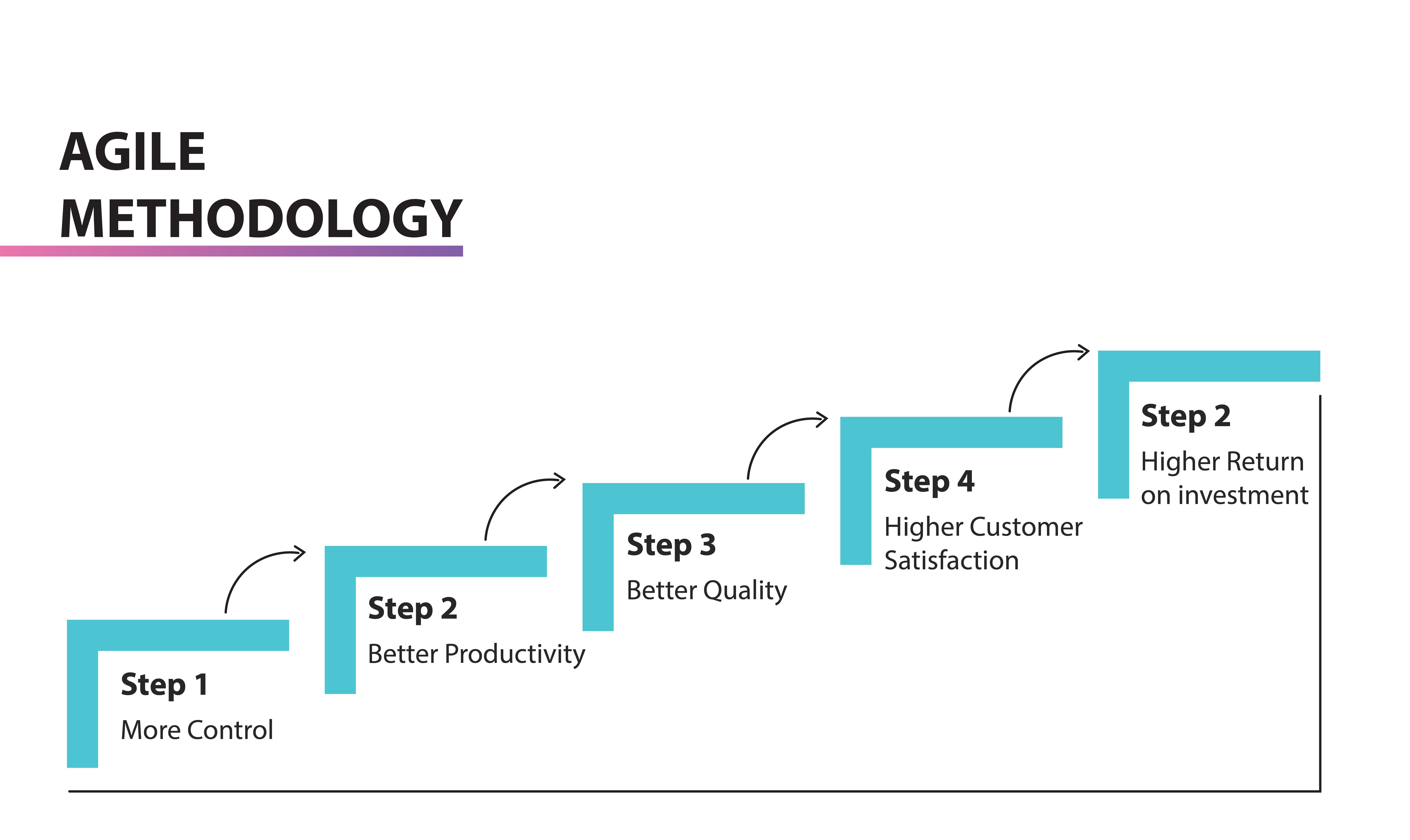
Agile is an iterative approach to software development that focuses on delivering small, functional increments of a product quickly. Work is structured into time-boxed sprints typically two to four weeks with each sprint delivering a defined set of features, prioritised by business value in collaboration with the client. If a sprint does not fully achieve its goals, priorities can be adjusted in the next planning cycle.
Benefits of Agile Methodologies
Rapid Feedback: Continuous client engagement across the project lifecycle enables real-time course correction.
Client Ownership: Close collaboration between the development team and the client creates shared investment in the outcome.
Time-to-Market: Agile allows software to launch with minimum viable features and improve iteratively reducing the time before the product is in users' hands.
User-Focused Development: Constant client input throughout development increases the likelihood that the delivered product accurately reflects user needs.f
Downsides of Agile Methodologies
Intensive Client Involvement: Agile requires ongoing client participation, which may not suit all clients' schedules or ways of working.
Dedicated Team Engagement: Agile works best when the development team is fully dedicated to the project partial allocation undermines the sprint cadence and collaborative dynamic.
Flexible Scope: Rapidly evolving priorities and time constraints can lead to incomplete sprints, which may increase overall cost and timeline if not managed carefully.
Team Proximity: Agile benefits from close working relationships, though modern collaboration tools have made distributed Agile teams more effective.
Continuous Refactoring: The iterative process frequently requires refactoring, particularly on large or complex projects where architectural decisions made early in the build need revisiting.
Choosing Between Agile and Waterfall The Chirpn Approach
Chirpn delivers projects through AutoPATH, an AI-orchestrated software development lifecycle framework that combines the predictability of Waterfall with the adaptability of Agile. Clients receive early visibility into the final product through integrated prototyping, which improves requirement comprehension before the primary architecture is set. We then apply iterative development and continuous client dialogue to refine requirements within that established framework maintaining overall system integrity while remaining flexible to changing needs.
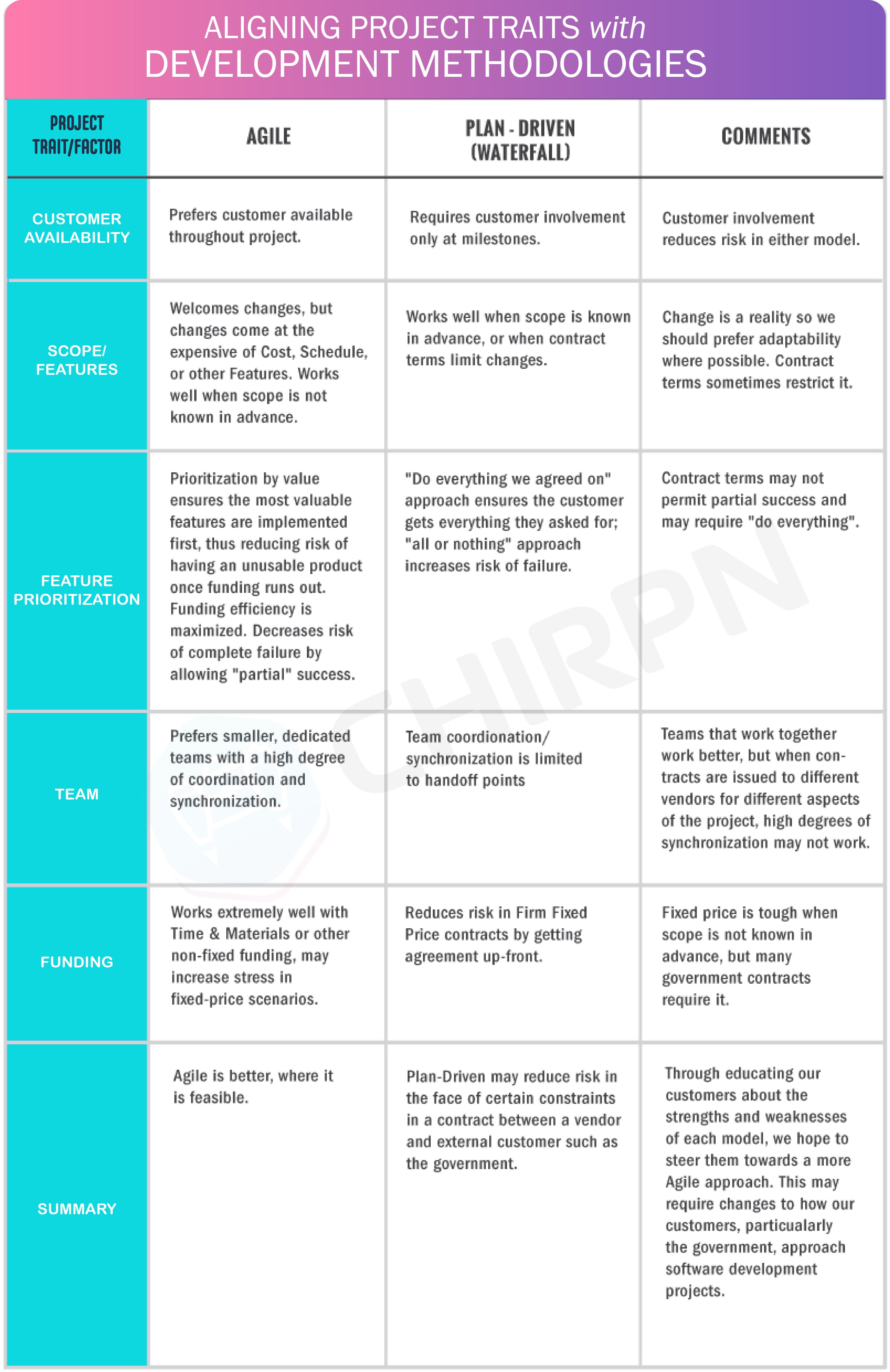
Selecting the right methodology depends on a project's specific characteristics. Key factors we consider include:
Requirements clarity: Well-defined, stable requirements favour Waterfall; evolving or partially understood requirements favour Agile.
Client availability: Clients who can commit to ongoing engagement throughout the project are well-suited to Agile; those with limited availability may prefer Waterfall's structured review points.
Project scale and complexity: Large, architecturally complex systems with many integration dependencies often benefit from Waterfall's upfront design rigour. Smaller, product-focused builds with a clear MVP often move faster under Agile.
Time-to-market pressure: Where early delivery of a working product is commercially important, Agile's sprint cadence is the stronger choice.
No single methodology is right for every project.