



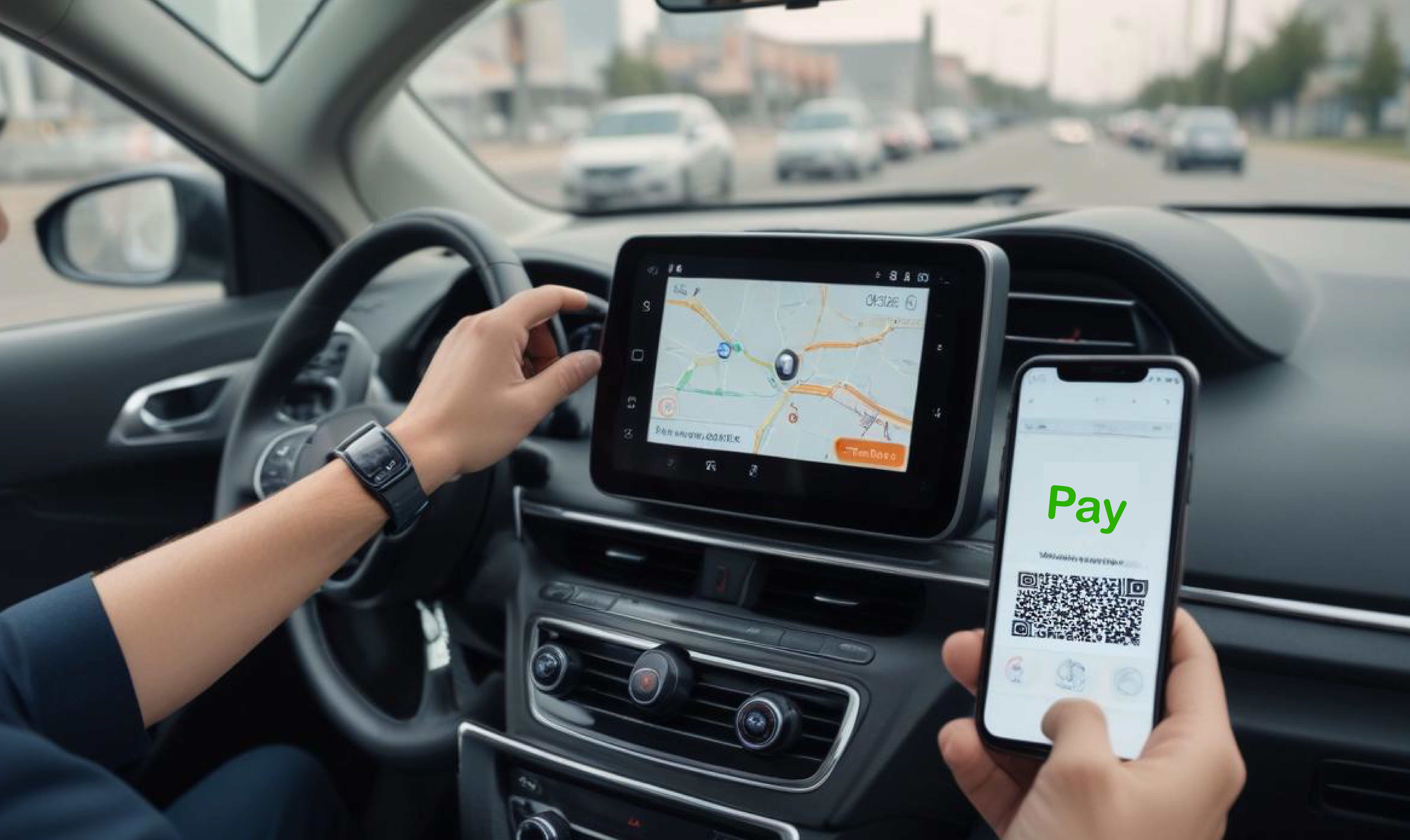

Payment transactions have always shaped customer experience but the vehicle is becoming the newest payment terminal. As connected vehicles move from novelty to mainstream, machine-to-machine (M2M) payments are emerging as a meaningful shift in automotive finance: enabling in-car transactions without apps, wallets, or manual card entry.
Connected Vehicles and the In-Vehicle Payment Opportunity
Connected, internet-enabled vehicles can facilitate payments directly from the car allowing drivers to pay for tolls, parking, fuel, charging, and drive-through purchases without reaching for a phone or card. The result is faster, safer, and more seamless transactional experiences at every touchpoint in a journey.
India's FASTag system is a live example at scale. FASTag-equipped vehicles pass through highway toll booths without stopping for cash or cards; the toll is deducted automatically via RFID. The system has significantly reduced toll plaza congestion and, by removing a reason for drivers to handle their phones at speed, has also improved road safety.
The global market for in-vehicle payments is expanding at a significant compound annual rate through 2030, driven by the convergence of connected vehicle infrastructure, fintech innovation, and consumer demand for frictionless transactions. See: Fortune Business Insights In-Vehicle Payment System Market Report.
Key In-Vehicle Payment Applications
- Automatic highway toll payments (e.g., FASTag, ETC systems)
- Smart parking fees enter, park, exit with no ticket or payment terminal interaction
- Fuel and EV charging station payments
- Vehicle wash and servicing charges
- Drive-through food and retail purchases
- Account transfers and peer-to-peer transactions
- Mobile commerce while travelling
Current Industry Trends
Automotive manufacturers and fintech providers are investing in new in-vehicle payment infrastructure, with AI-driven personalized offers emerging as an added-value layer on top of transaction capability. The vehicle becomes not just a payment terminal but a data-rich context for relevant, time-sensitive financial products.
Manufacturers that want to participate in this shift need to upgrade their technology infrastructure and invest in platforms capable of delivering both immediate transactional capability and sustained, evolving payment experiences as consumer behaviour and regulatory environments develop.
Enabling Technologies
RFID Tags
Short-range radio signals capture identification details without requiring internet connectivity. Mature, proven technology FASTag and similar toll systems are deployed at national scale on RFID infrastructure.
Bluetooth Low Energy (BLE)
Provides extended wireless connectivity for proximity-based payments. Lower power consumption than standard Bluetooth, though deployment at scale requires investment in supporting infrastructure.
APIs
The most sophisticated and secure integration approach connecting vehicle systems directly to payment networks via standardised interfaces. Typically found in premium vehicles with embedded connectivity hardware.
Internet of Things (IoT)
Facilitates real-time data transmission between vehicles and payment systems, maintaining the persistent connection that enables seamless transactions without driver-initiated steps.
5G Communication
Low latency, high throughput, and enhanced security make 5G the enabling layer for real-time M2M transactions at speed. 5G also supports fraud detection processing and personalized offers delivered to the vehicle in motion.
Biometric Authentication
Iris recognition, facial recognition, voice systems, and fingerprint sensors verify payment authorisation inside the vehicle removing the need for PINs or passwords in a driving context.
Tokenization Frameworks
Encrypt sensitive payment credentials card numbers, account details so that the vehicle stores and transmits tokens rather than the underlying financial data. Integrates with established bank and payment network security frameworks.
Payment Methods
The primary in-vehicle payment methods are credit and debit cards (still most widely used), digital wallets (eliminate physical card requirements), RFID (fast, contactless best suited to toll and parking), and QR codes (flexible, low-infrastructure). Each method involves trade-offs between convenience, security infrastructure requirements, and regulatory compliance.
Critical Challenges
Security
Protecting vehicle payment systems from cyber threats requires layered defences: encryption, tokenization, biometric verification, and continuous monitoring. A compromised in-vehicle payment system carries both financial and safety implications.
Compliance
In-vehicle payment systems must comply with regional financial regulations, data protection laws, and payment card industry standards which vary significantly across markets. Manufacturers deploying globally need multi-jurisdiction compliance architectures.
Cost
Substantial R&D, hardware integration, quality assurance, and ongoing security maintenance investment is required before in-vehicle payment becomes viable as a consumer product. The business case needs to be modelled against the vehicle lifecycle and the transaction volumes realistically achievable.
Consumer Adoption
Building consumer confidence in in-vehicle payments and transitioning users away from smartphone-based alternatives they already trust requires clear communication of security posture, smooth onboarding, and demonstrable reliability from the first use.
The Road Ahead
In-vehicle payments will keep growing, driving new use cases and business models as vehicle connectivity matures, 5G coverage expands, and consumer expectations shift. Manufacturers that build payment capability into their connected platform now are positioning for a market where the vehicle is a first-class financial channel not an afterthought.
How Chirpn Helps
Chirpn helps automotive manufacturers and fintech providers implement secure, efficient, and customer-centred payment solutions. Through the AutoPATH delivery framework, Chirpn accelerates the integration of M2M payment capabilities into connected vehicle platforms bringing IoT, AI, and payment infrastructure together within a structured 45–60 day delivery cycle.