



The Standish Group's 2020 CHAOS report, cited in a peer-reviewed analysis published in ACM Queue in 2024, reported that only 31% of software projects succeeded on the original terms, 50% were "challenged" (late, over budget or scope reduced) and 19% failed outright. The Standish Groups’s methodology including how “project” is defined and the composition of the sample is proprietary, so the denominator and scope of the underlying data are not independently verifiable from this secondary citation. Treat the direction of the finding as a useful context rather than a precise industry-wide statistic.
Often that difference between the planned and achieved results is not a coding problem, but a scoping and estimation problem which is why it's more important to understand software product development cost, timeline and process before you sign a quote than compare prices per hour among vendors.
You will learn what really affects software development costs, a realistic walk-through of the 6-stage software product development process, how to obtain a software development cost estimate that you can trust, and what could happen to turn a reasonable software product development budget into the 50% “challenged” category.
Key Takeaways
- An ACM Queue, 2024 peer reviewed analysis cites the Standish Group 2020 CHAOS report which reported 31% of software projects succeeded on original terms, 50% were “challenged” and 19% failed. The Standish methodology is proprietary, treat these figures as directional context, not a verified population wide statistic. Secondary citation via ACM Queue, 2024
- The software development cost is more about scope and integration count as well as the compliance requirements than it is about the team size and location of the vendor.
- The first phase is the most common reason for scope creep later on in a real software product development process - there are six phases of software product development: discovery, design, development, QA, deployment, and post-launch iteration and skipping the first phase is one of the most common ways for scope creep to happen.
- Any software development cost estimate or timeline provided prior to your vendor scoping your specific project would be considered an estimate and not a commitment.
What is a Software Product Development Company?
A software product development company does not simply code against a completed specification, it's usually the one responsible for scoping and validation, or even choosing the correct specification, to begin with. This is important because it's not always bad engineering that's causing a blown budget or missed deadlines; it's that nobody did a careful study on the feature set at the beginning. When a company views discovery as a bounded, deliverable phase that is not hidden away in the general build estimate, it provides you with a concrete milestone to turn it around before a significant portion of your budget is gone.
The real answer to the question "What drives software development costs?".
One of the most searched and least specifically answered questions in this space is software development cost, primarily because it's hard to give a number that can be generalized for any given project when the truth is that it depends on a variety of factors unique to your project. No matter which vendor you end up working with, four things play a major role in moving cost and time.
The scope and complexity of the features. A narrow scope is faster and more predictable to complete than one where we'll figure out the details as we go is still on the plan at the start of the project and vague scope is the biggest cause of mid-project cost growth.
Integration count. Each additional integration makes for another testing surface for the product and another means for the timeline to slip, and a stand-alone product is much easier to estimate than one that needs to be synced with an existing CRM, legacy database or third party API.
Requirements for compliance and data-sensitivity. Regulated industries such as healthcare, finance, and others with defined compliance obligations, require architecture work to meet a specific auditable standard, encryption schemes, access control models and audit trails designed to satisfy a particular regulatory framework. That compliance work must be planned from the beginning not retrofitted. Baseline encryption and access control are good practice for any software that handles user data regulated or not, what compliance adds is the obligation to demonstrate and document that baseline to a defined standard.
Legacy system dependencies. A product that requires connection to or modernization of an existing legacy system is likely to be more time consuming than a greenfield product because some of the engineering time will be spent understanding and working safely with a system that was not fully documented when it was built.
The ‘take away' for you: Cost to develop software should be calculated based on your answers to these four questions, and not based on a number you read in a blog post that you cannot see into your project. If a vendor is willing to give you a serious number before talking you through these things, he's measuring hours, not your product.
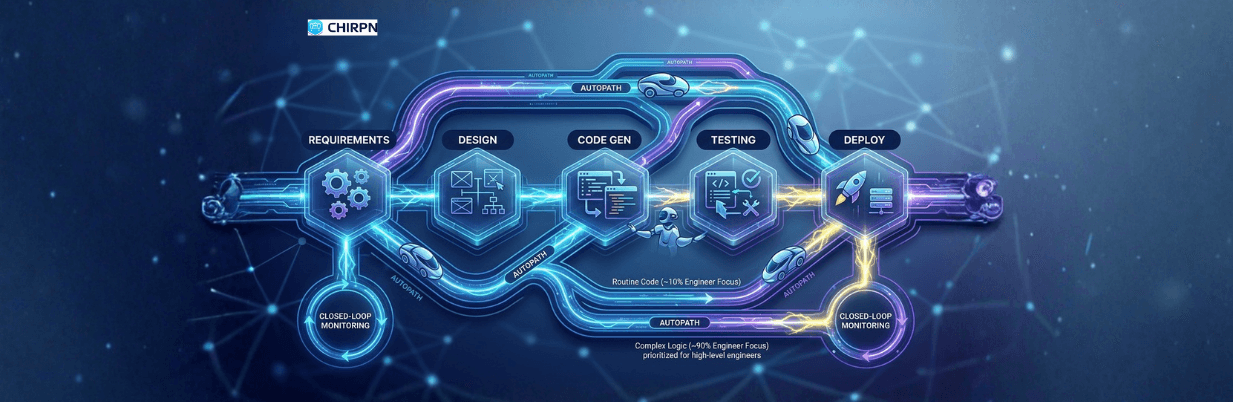
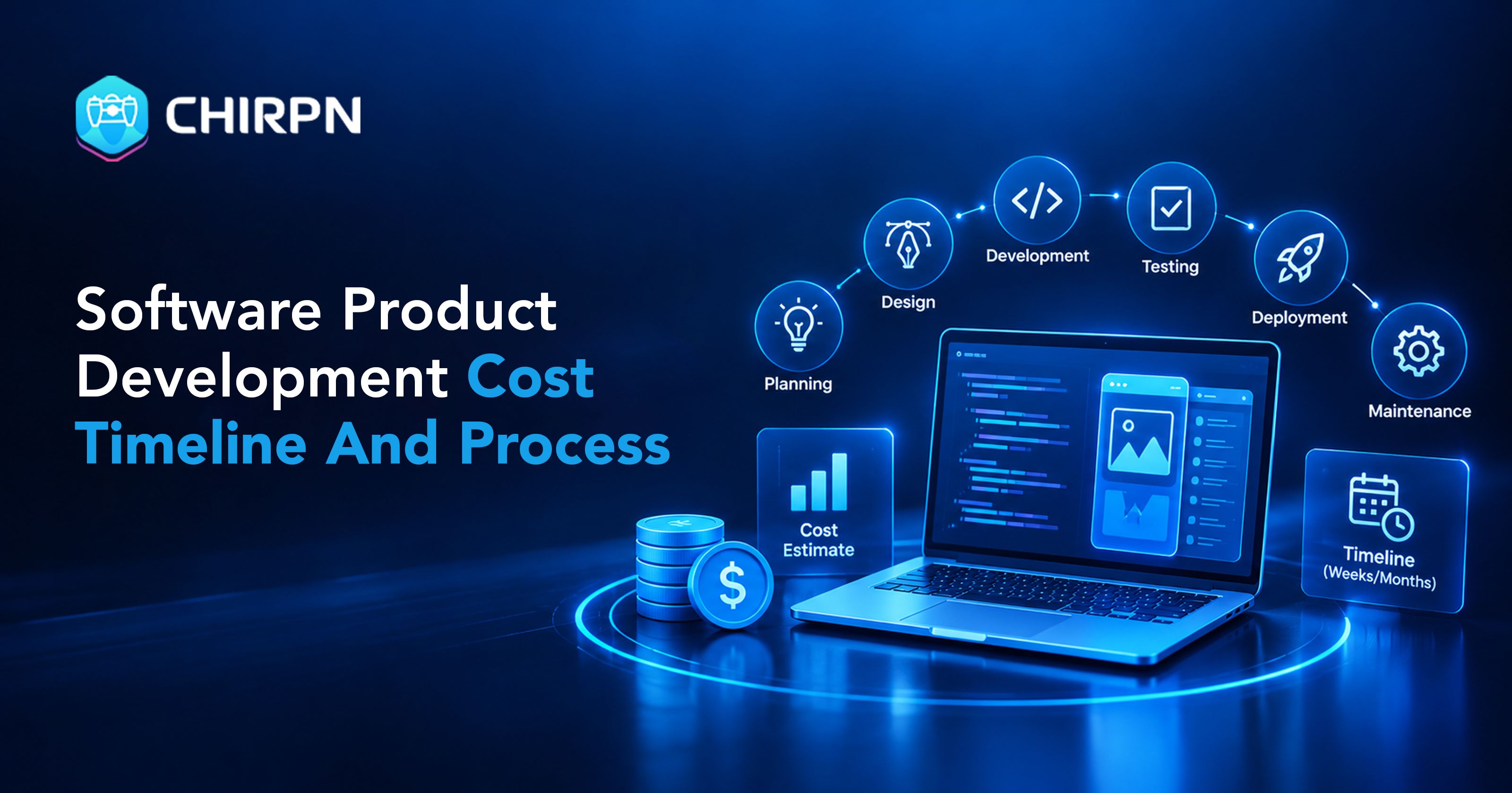
The 6-Phase Software Product Development Process
1. Discovery and scoping
Before a feature can be included in a build plan, stakeholder interviews, market validation, and a clearly defined problem statement occur. This phase should result in a written scope document and a written feature list, and should be an agreement, not a verbal understanding.
2. Design (UX/UI & architecture)
Interface design and technical architecture decisions are made concurrently, with the decisions in technical architecture made based on what the actual product needs, and the scale, integration, and hiring plans of the team.
3. Development
Progress and direction is tracked regularly based on the scope of work, generally in short sprints and not in the one long, unbroken sprint, against the original plan to reduce the risk of expending a lot of effort on an assumption that proves wrong.
4. Quality assurance and testing
Testing is most effective when it runs continuously alongside development unit and integration tests written as each feature is built, security checks incorporated at the design and code-review stages, and regression suites maintained as the codebase grows. A dedicated QA phase before launch confirms that the integrated product meets its acceptance criteria; it is not when testing starts. Compressing all testing into the final week is a reliable way to surface scope or integration issues too late for the timeline or budget to absorb.
5. Deployment
The product will be shipped to a select group first where possible, and monitored for both functional issues and security signals before releasing to all intended users. Staged rollout limits the impact of any defect discovered post-deployment. The monitoring instrumentation put in place at this stage should remain active in production; it is not removed once the full release is complete.
6. Post-launch iteration
The product is not finished when it launches. The team that built it should remain involved to understand how it is actually being used that context is what makes post-launch iteration efficient. Ongoing responsibilities include dependency and security-patch management (vulnerabilities in third-party libraries and infrastructure are discovered continuously, not only during the initial build), performance monitoring, and incorporating real usage data into the next iteration of features. A team that disengages at deployment leaves without the context to do any of that work quickly or reliably.
How to Get a Software Development Cost Estimate You Can Trust?
A reliable software development cost estimate is one that is based on a vendor who has not simply used a generic calculator or pulled a number from a competitor's published range, but has gone through your specific scope, integrations and compliance requirements. Request an itemized estimate with assumptions, as an itemized estimate will tell you what is included in the estimate and will give you something to counter if you feel a line item is too high. If an offer that is quite a bit lower than all of the other vendors is presented, do not celebrate that offer, it means that they did not do the same thing with a more efficient process, it means they assumed a narrower scope.
Also, in software development pricing conversations, it is easier to get along if you ask outright how change requests are managed throughout the project. After all, on almost every software development project, there are going to be scope changes, so the question isn't whether there are going to be changes, but how.
Common Pitfalls That Can Destroy Software Development Budgets And Timelines
Assuming the initial estimate is the same no matter what scope changes occur. Nearly every real software development project undergoes some modification from the original spec; the problem is not the modification, it's not having an agreed process for what will happen to cost and timeline when a change occurs.
Avoiding discovery for the sake of speeding up the process. This is because projects that immediately begin with a build estimate instead of a discovery phase often end up in the middle of build, re-discovering the requirements.
Selecting a vendor solely based on lowest bid without scope changes. As mentioned, a lower cost than the other quotes is indicative of a limited scope and not necessarily an efficient comparison before assuming any savings based on the difference.
Assuming fixed-bid contract means there is no delivery risk. A fixed-bid contract does not reduce the importance of scope definition, acceptance criteria, exclusions, dependencies, or change-control terms it increases it. A fixed price locks the vendor's revenue, so any ambiguity in scope or acceptance criteria shifts risk to the buyer: scope gaps become disputes at hand-over, unspecified acceptance criteria become arguments about whether deliverables are complete, and undocumented exclusions or dependencies become the basis for legitimate change-order requests.
Differences Between Custom Software Development Cost And Off-The-Shelf
Custom software development cost is not the same as off the shelf software pricing; and that's one of the more common ways founders get surprised when a vendor estimates the cost. Off-the-shelf software distributes its development cost across all purchasers, so the per-organization price is typically lower upfront. Custom development is fully funded by the commissioning organization. That initial comparison captures only part of the picture. A complete lifecycle assessment should include: recurring subscription or per-seat licensing fees for off-the-shelf software, which can scale significantly as user count or feature tier grows; ongoing maintenance, hosting, and security-patch costs for a custom build; the cost of adapting your workflows to fit a product built for a general market versus building to your own requirements; and the risk of vendor repricing, acquisition, or discontinuation affecting a platform you have come to depend on. Neither option is reliably less expensive over a three-to-five-year horizon without modelling all of these factors against your specific usage.
When considering whether to purchase a product or have someone custom build the tool, the question should not be which is cheaper – it is important to have a narrow question, such as does the product come close to what is needed 80% of the time and can that 20% be compromised, or is the value of the product based on something that no other product provides? Product development services tailored to your workflow are more likely to make sense closer to the second scenario where "close enough" and "actually right" are the entire product development point.
The same philosophy applies to the decision of whether to go the custom route or adopt an existing platform you use. It's quicker to do a validation on something you already have, because the environment that already exists for the infrastructure authentication, data storage, user management have already been built and tested. A full custom build seems more appropriate when your product's value proposition can't fit within any other platforms' framework.
Frequently Asked Questions
What factors drive software development cost up or down?
Costs that outweigh team size or vendor location include scope and feature complexity, the number of systems the product must connect with, whether it needs to comply or not, and whether the product is dependent on legacy systems. Don't get the vendor to take you through these factors; they've been scoped; don't get the vendor to give you a number and not ask you about these factors; they've been estimating hours and not your project.
What are the stages of software product development lifecycle?
It takes a complete process to go through discovery and scoping, design, development, quality assurance, deployment, and iteration after deployment. One of the most common causes of a project running over budget or over schedule is to avoid the discovery phase up front to save time.
How do you get an accurate software development cost estimate? Instead of a generic online calculator or a single flat fee, ask a vendor who has reviewed your scope, integrations and compliance requirements to provide you with an itemized estimate with stated assumptions. Specifically inquire about the vendor's process for change requests during the project - most "real projects" change a little from the initial scope.
What is the average duration of a software product's development?
Timelines are dependent on the same factors that affect cost scope, integration count and compliance complexity, meaning that a product with a narrow scope and a limited number of integrations will move significantly faster than one with legacy systems or regulatory review considerations. Don't take any hard-and-fast date that may have been used in a project that a vendor hasn't seen.
Why Chirpn
The platform and product development service provided by Chirpn is based on the same sequencing described above, and a documented discovery phase is undertaken before any build commitment is made, with the same team remaining with the client following the product launch for post-launch iteration, instead of handing the client to another support desk. It's important to note that a company that scores itself is also vendor-reported information, and should be compared accordingly with other vendors you're comparing, and Chirpn has its own 5-signal framework for evaluating software product development companies. In case you're a founder who is just out to scope a first version of a product, Chirpn's MVP development guide helps you scope features down to what is truly necessary to validate the product, before you ever get around to cost planning or time planning.
When you're in the early stages of a software development project, if you have a specific estimate in mind that's itemized and not a general estimate, discuss the scope of your project with Chirpn directly.