





A CEO of a manufacturing company discovered that his sales team was promising delivery dates that were impossible. Their CRM was unable to provide information about production capacity. Manufacturing couldn't access actual orders. The result? $14 million in cancelled contracts and damaged relationships with three major clients, all because their systems couldn't talk to each other.
Six months later, after implementing proper API integration services, the same company increased its win rate by 34% because sales quotes now reflect real-time production schedules, inventory levels, and delivery capabilities.
What API Integration Actually Means for Your Bottom Line
API integration creates automated data flows between your business applications, eliminating manual processes that create delays, errors, and lost opportunities. When your systems share information automatically, your business responds to changes in real-time instead of hours or days later.
With api integration, the order change automatically triggers production schedule adjustments, material orders, financial forecasts, and customer notifications within minutes. Your business adapts immediately instead of discovering problems weeks later.
The global API marketplace is projected to grow from $18 billion in 2024 to $49.45 billion by 2030, driven by businesses discovering they can't compete without these automated connections.
The Real Cost of System Disconnection
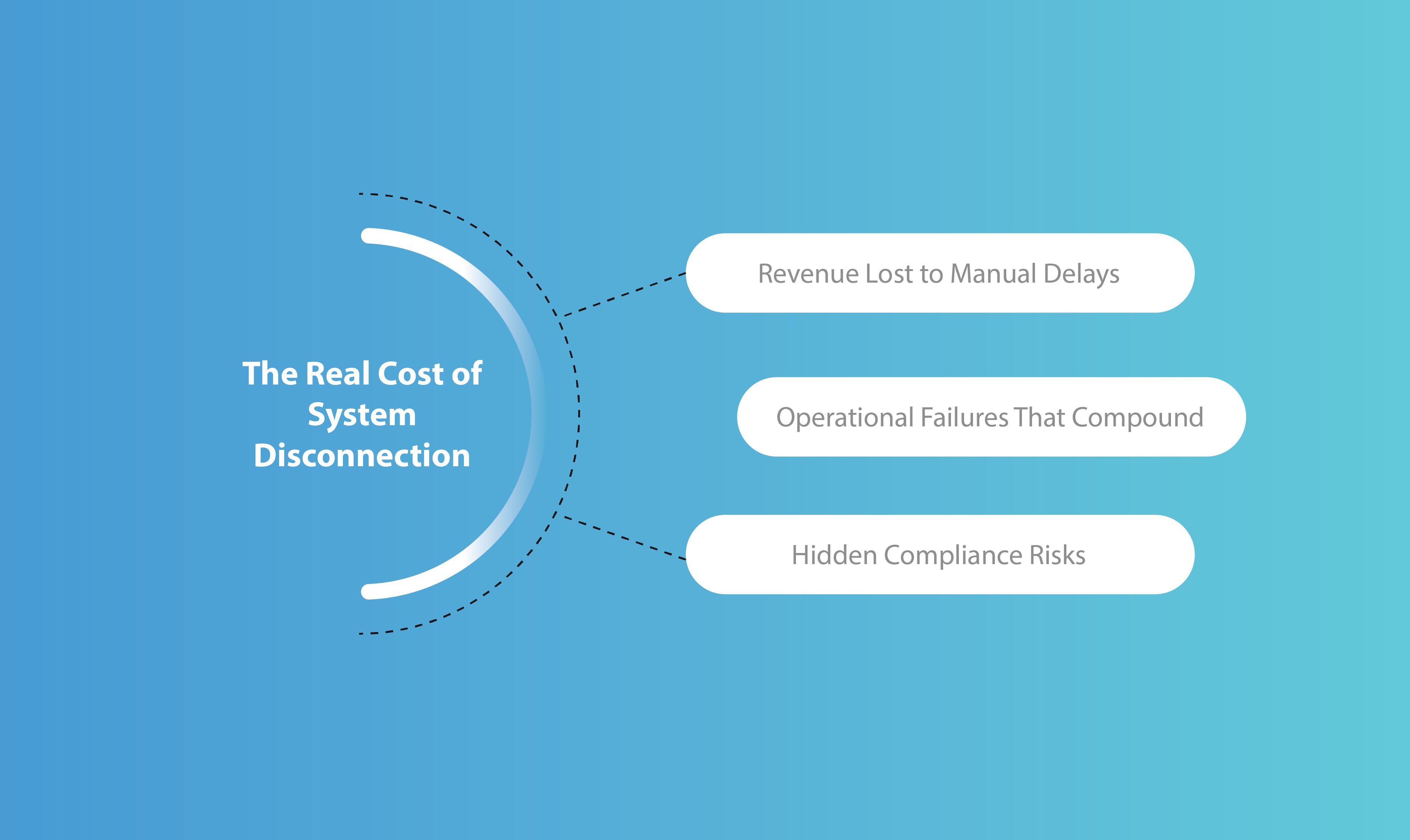
Revenue Lost to Manual Delays
A B2B distributor calculated that manual quote processes cost them 23% of potential deals. When customers requested pricing for complex orders involving multiple product lines, their sales team needed 2-3 days to gather information from different systems. Competitors with automated quoting won those deals while they were still building spreadsheets.
After implementing API connections between their CRM, inventory system, and pricing engine, quote response time dropped to 15 minutes. Their close rate increased by 41% because they could respond while customers were still evaluating options.
Operational Failures That Compound
API downtime increased from 34 minutes weekly in Q1 2024 to 55 minutes in Q1 2025, but the bigger problem is what happens when systems aren't integrated at all. Manual processes fail when key people are unavailable, systems crash, or information gets lost.
A logistics company discovered its biggest customer was experiencing delivery delays because their tracking system wasn't connected to its dispatch system. Drivers were receiving outdated route information while customers saw incorrect delivery estimates. The disconnect cost them $2.8 million in contract penalties and nearly lost their largest client.
Hidden Compliance Risks
Financial services and healthcare organizations face particular risks from disconnected systems. When patient data or financial information exists in multiple systems without synchronization, compliance becomes exponentially more complex and expensive.
A regional bank spent $1.2 million responding to regulatory audits because their loan origination system wasn't properly connected to the compliance monitoring platform. Data inconsistencies required manual reconciliation and extensive documentation to satisfy examiner requests.
API and data integration create automatic audit trails and ensure data consistency across all business systems, reducing both compliance costs and regulatory risk exposure.
How Successful Companies Use API Integration Services
Manufacturing: Predictive Operations
An aerospace components manufacturer connected their production equipment APIs with their supply chain management system, creating predictive maintenance and inventory optimization. When machines signal potential maintenance needs, the system automatically orders parts and schedules technician visits before failures occur.
This integration prevented $3.2 million in production delays while reducing inventory carrying costs by 18% through more precise demand forecasting based on actual equipment performance data.
Professional Services: Automated Resource Management
A consulting firm integrated their project management system with CRM, creating automatic resource allocation based on project requirements and consultant availability. When clients approve new project phases, the system automatically schedules resources, updates budgets, and generates billing forecasts.
The integration increased project profitability by 27% by eliminating resource conflicts and ensuring accurate billing for all client work.
E-commerce: Dynamic Customer Experience
An industrial equipment retailer connected their e-commerce platform with their ERP system, creating real-time inventory visibility and automated customer communications. When products become available, the system automatically notifies interested customers and processes pending orders.
This integration increased conversion rates by 22% while reducing customer service inquiries about product availability by 78%.
Choosing the Best API Integration Platform
Evaluating Platform Capabilities
The best api integration platform depends on your specific technical environment and business complexity. Simple SaaS-to-SaaS connections work well with platforms like Zapier, while complex enterprise environments need platforms like MuleSoft or custom development frameworks.
The API Management Market is valued at $6.85 billion in 2025 and expected to reach $32.48 billion by 2032, reflecting the growing sophistication of integration platforms and increasing business demand.
Consider these evaluation criteria:
- Number and types of pre-built connectors
- Custom development capabilities
- Data transformation and mapping tools
- Security and compliance features
- Scalability and performance limits
- Monitoring and troubleshooting capabilities
Cost Structure and ROI Reality
Integration costs vary significantly based on complexity. Simple two-system connections might cost $5,000-12,000, including setup. Enterprise implementations connecting multiple legacy systems can reach $50,000-150,000.
However, calculate costs against manual alternatives. A distribution company was spending $180,000 annually on staff time for data entry and reconciliation between their warehouse management and accounting systems. API integration reduced that to $25,000 in platform costs while improving accuracy and speed.
Security and Governance Requirements
API security requires comprehensive authentication, data encryption, and access monitoring. Common integration issues include inconsistent data, poor documentation, and security risks, making platform selection critical for business success..
Implementation Strategy for Business Success
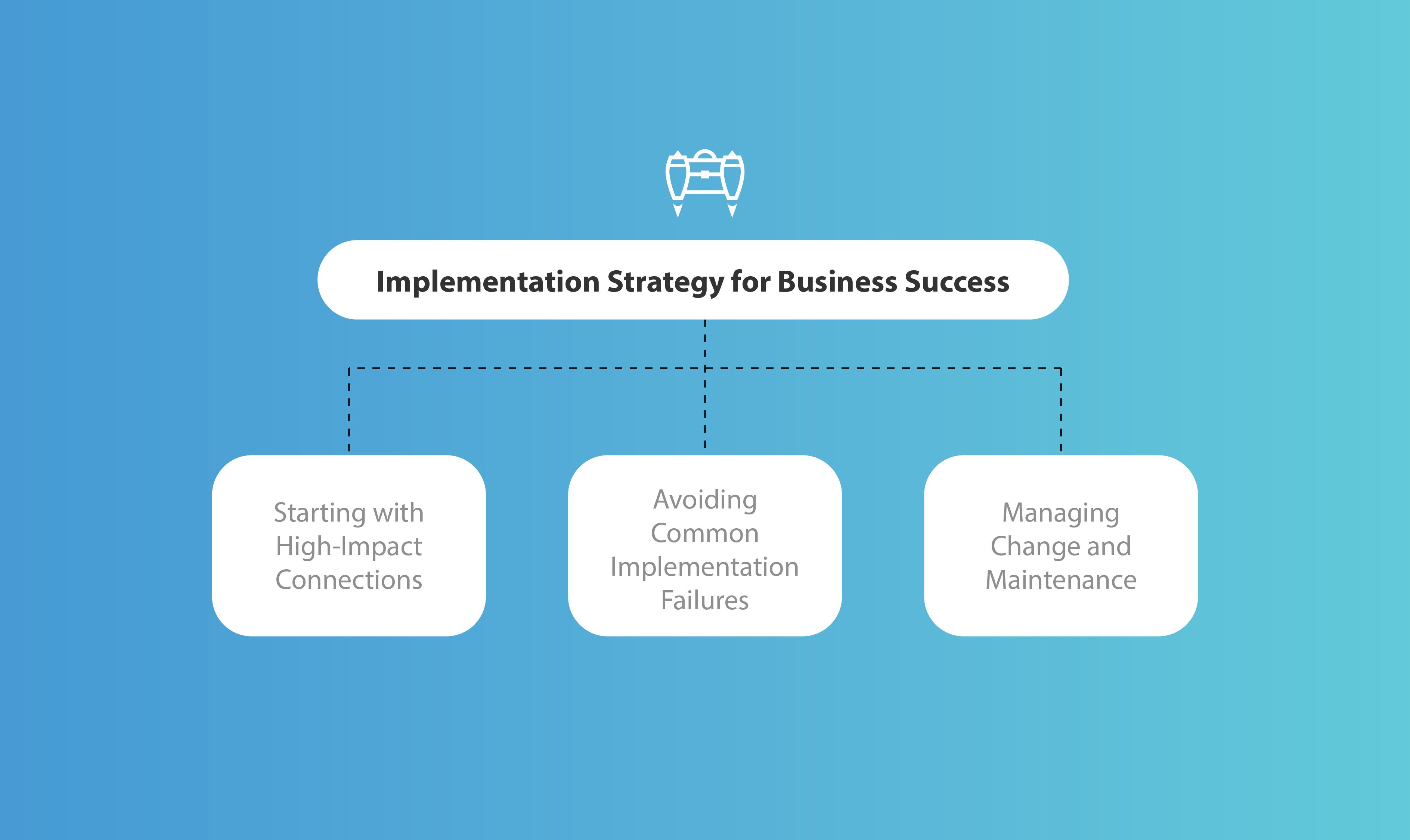
Starting with High-Impact Connections
Begin with integrations that eliminate manual processes in customer-facing workflows or critical operational areas. Customer service teams accessing unified customer data see immediate benefits, while inventory management integrations prevent costly stockouts and overstock situations.
Avoiding Common Implementation Failures
The most common API integration issues are complexity and scalability challenges, with building integrations one by one creating slow and complex processes.
- Plan your integration architecture holistically rather than creating point-to-point connections.
- Document business processes before and after integration to measure actual impact.
- Track metrics completion time, error rates, and customer satisfaction scores.
Managing Change and Maintenance
Plan for ongoing platform changes and API updates. Major software providers update APIs every 12-18 months, requiring integration maintenance to ensure continued functionality.
Train internal teams on integration monitoring and basic troubleshooting. When integrations fail, business processes shouldn't entirely stop. Design fallback procedures and monitoring systems that detect and quickly resolve issues.
Measuring Integration Success
Business Impact Metrics
Track metrics that demonstrate clear business value:
- Revenue cycle time reduction
- Error rate improvements in critical processes
- Customer response time acceleration
- Staff productivity gains from automated processes
Frequently Asked Questions
What makes API integration different from other data sharing methods?
API integration enables real-time, automated data synchronization compared to batch file transfers or manual data entry. When information changes in one system, APIs immediately update all connected systems, ensuring consistent data across your entire business operation without human intervention.
How long does API integration implementation typically take?
Simple two-system integrations can be completed in 2-4 weeks. Complex enterprise implementations involving multiple legacy systems may require 3-6 months. Timeline depends on system complexity, data mapping requirements, and internal resource availability for testing and validation.
What happens if an integrated system fails or goes offline?
Well-designed integrations include error handling with data queuing for temporary outages and alternative workflows for critical processes. Most integration platforms provide monitoring that detects failures quickly and automatically retries transactions when systems recover.
How do I calculate the business case for API integration services?
Compare manual process costs (staff time, error correction, delayed decisions) against integration platform costs plus implementation expenses. Include revenue impact from faster response times and improved customer experience. Most organizations see positive ROI within 6-12 months through the elimination of manual processes and reduced errors.
Can API integration work with legacy systems that don't support modern APIs?
Yes, through middleware solutions that translate between legacy system formats and modern APIs. Many successful integrations connect decades-old ERP systems with cloud applications using integration platforms designed specifically for hybrid environments.
Companies that treat API integration as optional infrastructure will find themselves competing against businesses that use connected systems to respond faster, make better decisions, and deliver superior customer experiences.