


Build Operate Transfer in IT: The Definitive Guide for 2026
The Build Operate Transfer model in IT has gone from emerging offshore options to mainstream strategic choice. According to a survey, 72% of employers worldwide are unable to recruit workers for technical jobs, and 74% of US tech employers report having trouble with hiring engineers. The BOT is the model that responds to that demand and provides a structure that pure outsourcing can't, the team, IP, processes and legal entity are all transferred to the client.
This comprehensive guide explains how the BOT model IT outsourcing works in all three phases, when it is appropriate and when it is not, the distinctions between the BOT vs Staff Augmentation model across each dimension, and what the real-life transfer phase entails.
What is Build Operate Transfer IT?
What does the Build Operate Transfer model mean in IT services?
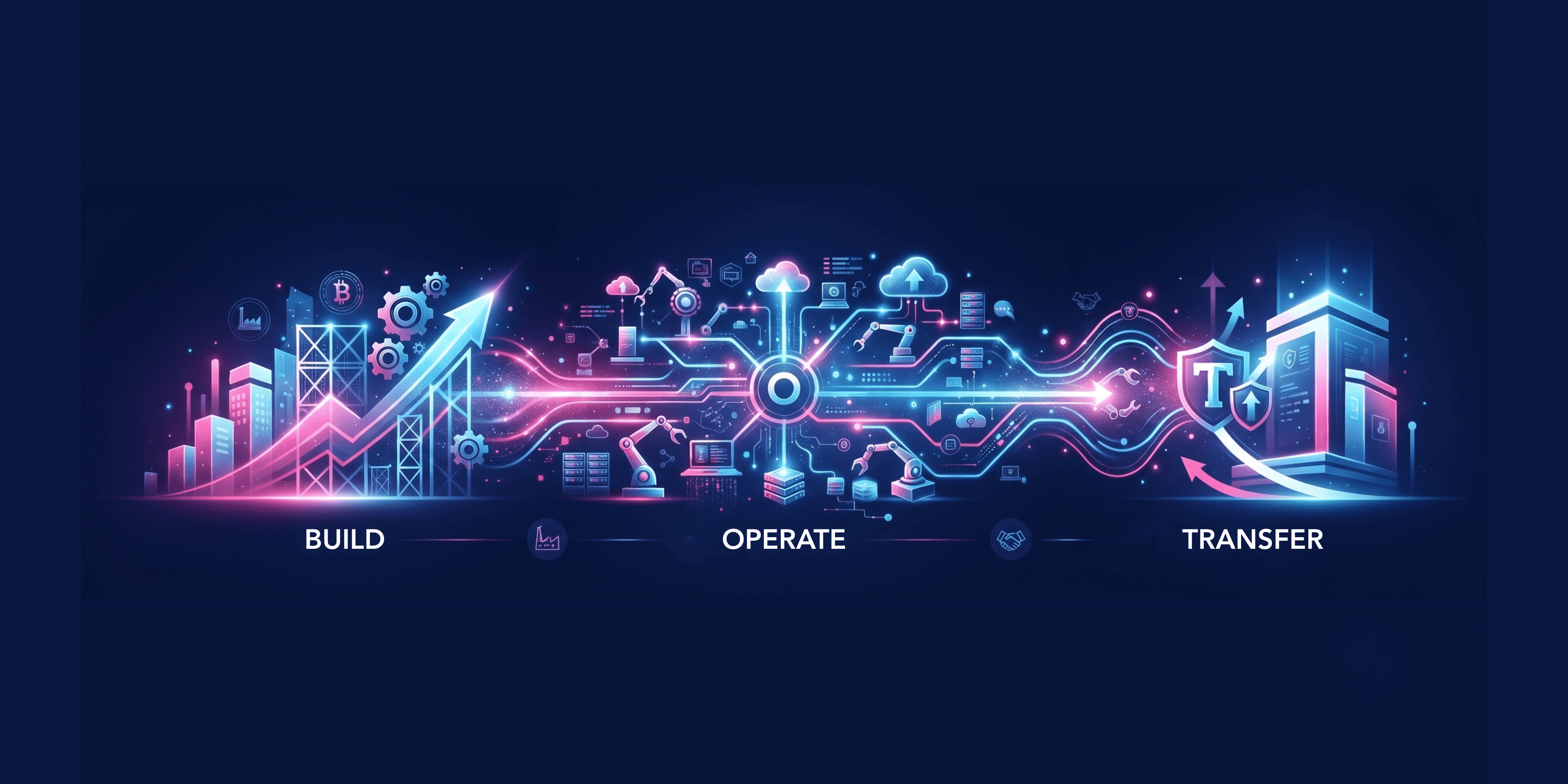
Build Operate Transfer IT is an offshore engagement model with three phases. The service provider hires a special team of offshore engineers, works with the team and hands it over (along with its process and legal entity) to the client in the future. The Build Operate Transfer model is a compromise between outsourcing (where the vendor keeps the control for life) and a captive offshore centre (where the client assumes all control from Day 1 and takes all of the risk).
Build: Establish The offshore operation is built by the vendor. The vendor provides legal entity/employer of record setup, provisioning of offices, IT infrastructure, end-to-end recruitment, onboarding and operating cadence setup. The client specifies the team and the hiring criteria, the vendor does the work.
Operate: The vendor handles employment, HR, payroll and compliance. Client has ownership of product direction and engineering. An 18 to 36-month period of operation is normally the duration of the operating phase in a BOT arrangement.
Transfer: Full ownership becomes client's. Employment of team members, operational processes, compliance documentation, tooling licenses, and infrastructure all go. A structured transfer programme normally lasts for 3-6 months.
When the BOT Model Is the Right Choice
The BOT model is applicable in three particular cases.
- If you want long term ownership. The Build Operate Transfer model provides the offshore engineering capability you need on your balance sheet in perpetuity. Pure outsourcing does not include the transfer of ownership, no matter the length of the engagement.
- You cannot absorb cold-start captive risk. Forming an legal entity involves hiring of local attorneys, company registration, employment law compliance, constructing payroll systems, and making initial hires before the initial engineer arrives onsite. The BOT offshore development ecosystem in India is well established to mitigate this cold-start risk with the support of a seasoned vendor and NASSCOM's India Tech Ecosystem publications confirm this.
- Your offshore horizon is 3 years or more. The Build Operate Transfer model's economics assume a transfer. For companies that require 12 months' or less capacity, staff augmentation is the better option. BOT model IT outsourcing is not an instrument for scaling the business for a short period of time, but it is more of a long term ownership tool.
How the Three Phases Work in Practice
How does the three phase BOT model IT outsourcing process work step by step?
Phase 1 Build (2–4 months). The build phase includes: legal entity or employer of record setup, provisioning of office/co-working, aligning IT infrastructure to the client's stack, briefing, sourcing, screening, technical assessment, offer management and onboarding of initial cohort, and setting up the operating cadence. The vendor arranges everything and places the execution at their discretion. The client determines the team structure, technical requirements, and hiring bar.
Phase 2 Operate (18–36 months). The employment relationship and the operational structure are managed by the vendor. The client has control over the direction and engineering of the product. These engagements most frequently under deliver during the operational phase of performance management. Clients who do not participate in technical reviews, team feedback and direction, find that the team they are inheriting is not at the level needed. Whether the transfer is a liability or an asset is a result of active client engagement, with regular technical reviews, direct access to offshore engineers, and shared planning cycles.
Phase 3 Transfer (3–6 months). The transfer phase is a program and not a one-off event. It involves: employment transfers, vendor contracts wind down, playbook transfer for operations, tooling licence innovation, compliance and HR documents transfer, and vendor relationship transfer. The most typical failure scenario: Clients think that this is a single transfer managed by the vendor. The transfer should be managed by the client with specific in-house expertise and external legal representation at the offshore site.
BOT vs Staff Augmentation: The comparison that matters
What's the difference between BOT vs staff augmentation in the IT offshore world?
BOT vs staff augmentation boils down to timing and complexity of ownership. All offshore employment complexity, HR, payroll and compliance from day one becomes the client's problem with staff augmentation, where offshore engineers are in direct management of the client from day one. The BOT model handles all this complexity through the vendor and ownership is transferred at a defined time.
Companies that have the best long-term results when it comes to the hiring of global talent opt for the ownership model rather than perpetual augmentation, as per research conducted at McKinsey Global Institute [mckinsey.com/mgi/overview] on global talent flows, wherever they are. Whether you want capacity or permanent capability is up to you to decide.
| Dimension | Outsourcing | Staff Augmentation | Build Operate Transfer IT | Captive Centre |
|---|---|---|---|---|
| Team ownership | Vendor | Client from day 1 | Vendor → Client at transfer | Client from day 1 |
| Operational mgmt | Vendor | Client | Vendor → Client | Client |
| Setup complexity | Low | Medium | Medium — vendor manages | Very high |
| IP ownership | Typically vendor | Client | Client from day 1 | Client |
| Time to first engineer | Days–weeks | Days–weeks | Weeks–months | 6–18 months |
| Long-term cost | Ongoing margin | Ongoing margin | Margin ends at transfer | Fully owned |
| Best for | Defined projects | Filling roles | Long-term ownership | Large perm ops |
Build Operate Transfer India: Why the Model Concentrates Here
Why is India the main destination of Build Operate Transfer IT engagements?
Build Operate Transfer India is the dominant model for technology companies in the USA and Australia.
First the talent volume in engineering: India is the second largest producer of software engineers after the USA.
Second, ecosystem maturity: The already existing BOT offshore development infrastructure in Pune, employer of record services, payroll compliance, office provisioning, legal frameworks means vendors can further reduce the build phase.
Third and specific to 2026: The expertise level of the AI engineering talent pool in India. India's talent pool in the field of LLM development, MLOps, computer vision, and data engineering is beneficial for any AI development company India engagement. The Build Operate Transfer India model, which isn't exclusive to traditional software builders, is becoming the go-to model for companies developing their AI product capabilities overseas.
IP and Ownership Provisions Every BOT Model IT Outsourcing Agreement Must Include
A BOT arrangement with no specific IP conditions causes risk to add up throughout the operating phase and come to light at transfer. There must be from the beginning four explicit provisions:
- Work product ownership. The offshore team does not transfer ownership of any code, documentation, architecture or technical outputs until they are created by the offshore team, at which point they are the property of the client. This should be clearly declared.
- Data handling. This should include data residency requirements, access controls, and what is done with the client's data where the vendor is storing it at the time of transfer.
- Tooling and infrastructure. All licences, subscriptions and accounts (during operating phase) should be in the client's name from the outset or novated to the client at transfer without ongoing dependency.
- Non-solicitation. Agreement shall not allow the vendor to recruit from the transferred team during a specified timeframe after the transfer.
How Chirpn organizes BOT Engagements
The Build Operate Transfer solution is tailored for US and Australian companies developing their offshore AI and engineering capability with a Build Operate Transfer India engagement. Chirpn provides you with a full-service legal structure, recruitment, onboarding and operational setup. In the operating phase, teams operate within Chirpn's AutoPATH AI orchestrated delivery framework. Upon transfer, the client will get a team already operating in an AI-enhanced mode, not one that needs to be "trained.
Clients who wish to find a less formal gateway to a BOT engagement before embarking on a full BOT can opt to use Chirpn's model for providing a dedicated offshore engineering unit without a transfer mechanism. Chirpn's Global Capability Centre solution provides the entire captive solution for clients prepared to own from scratch.
Frequently Asked Questions
What does build operate transfer IT mean?
Build Operate Transfer It is a three-phase offshore engagement model that involves a vendor that builds, operates and transfers full team and entity ownership to a client, for a specific duration. The Build Operate Transfer model is the quickest to achieve a project in the early stages and then control it in the middle or long-term without all the pitfalls of going through a cold-start experience.
What's the length of a Build Operate Transfer IT engagement?
The build time of a BOT offshore development project is normally about 2-4 months. The operating period can last 18-36 months based on agreement terms and maturity. The transfer programme lasts for three to six months. Total: Most Build Operate Transfer IT projects require 2 to 3 years to go from initial engineer to an ownership offshore entity.
What is the difference in BOT vs staff augmentation for IT teams?
Staff augmentation allows the client to be in complete control from the start, but will pass the responsibility for all offshore employment issues directly to the client. BOT model IT outsourcing is a model which takes care about the complexity of the operation while the vendor is involved in building and running the system, transferring the ownership to the client at the time of the agreement. The difference lies only in when you assume operational responsibility immediately or at a structured point when the team is well established.
Will a Small Team be able to participate in Build Operate Transfer India?
The Build Operate Transfer India engagements start to be most cost effective for 8+ engineers. The benefits of the model may be outweighed by the fixed cost of its entity, governance and administration of transfers for smaller teams. For companies with a need for 3 to 7 offshore engineers, a team structure in its entirety is more appropriate than Capacity PODs or until the team size makes it more cost-effective to hire an offshore full-bot offshore development team.
What is done when the team doesn't do so well during operation?
Performance during the operating phase is governed by SLA provisions in the Build Operate Transfer IT agreement. A robust agreement provides the client with the ability to ask for replacements, move up to the vendor's leadership and terminate the contract without any penalties if the vendor is in 'material breach'. These clauses should be agreed to when the contract is signed, rather than being discovered when issues arise to the standard of performance.