

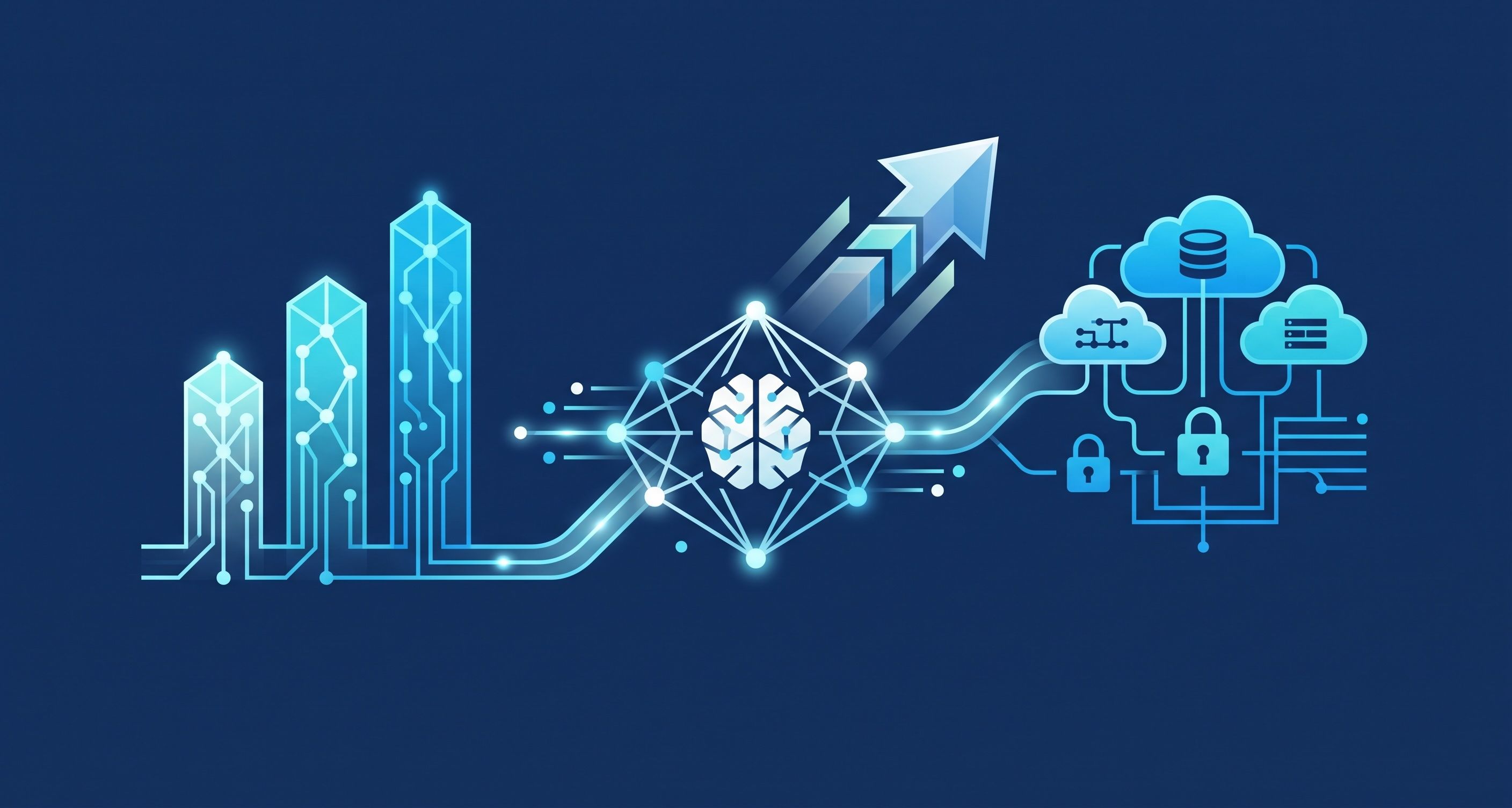

There's a new crop of listicles every year trying to determine which technologies are the most important. This guide to the biggest top AI, Machine Learning & IT trends every business should watch in 2026 is different: as a strategic technology trends overview, it aggregates the most important of these trends, but also attempts to explain how it will impact a business one that is not a huge enterprise IT department, but one that is growing.
The three most notable trends this year fit into one of three categories that apply to every business' technology strategy: creating the right AI infrastructure, aligning different AI systems together, and protecting everything as AI adoption grows. It covers each theme and the IT industry trends within, then what that means in practice not just as a reading exercise, but more as a useful planning tool to help navigate the future of ai for most businesses, where the outcome of the future will depend more on the deliberate sequencing of these three themes than on any single technology.
The Three Themes Of The Technology Trends For 2026
The top strategic trends for 2026 collectively form three themes, a framework that it's important to grasp before getting into the individual trends, as it illuminates how the trends are interrelated.
Strategic Theme
| What It Covers
| Business Priority
|
Building the Foundation
| AI platforms and infrastructure development tools, compute, and secure data foundations
| Develop AI without the need for dedicated tools or infrastructure.Develop AI without the need for dedicated tools or infrastructure.
|
Orchestrating AI Systems
| AI applications and orchestration, multiple models and agents collaborating together
| Use a combination of specialized AI systems, rather than a single general solution. |
What you build is what you own.If you build it, they will come.
| Security, trust and governance safeguarding AI systems and data used to power them.
| Treat AI governance as a launch requirement, not a later add-on |
It's not just large enterprise IT departments that need to worry about this; business technology trends overall suffer from a lack of orchestration, and a lack of security can create a risk no one signed up for. But the trends below are no exception, and show the overall artificial intelligence trends this year away from individual pilots and towards connected, controlled systems that are designed to endure beyond any one project.
Building the Foundation: AI Infrastructure that Scales
These trends centre on the basis of the platforms and infrastructure that power all the other aspects of AI in business. The most frequent hurdle for ambitious AI projects is the failure to implement the necessary infrastructure to maintain their use reliably at scale for months after the business begins to use them and ultimately has to start from scratch.
1. AI-Native Development Platforms
But there is a newer trend in software development, in which generative AI is itself becoming the tool with which software is created, allowing for quicker shipping by small teams where larger engineering teams were once needed.
Why it matters: It's one of the more obvious emerging AI technologies for companies that aren't necessarily a huge engineering shop. The difference in the size of engineering teams between startups and enterprises is closing at a rate that's unprecedented in the past 10 years.
2. AI Supercomputing Platforms
Cloud partnerships are helping to make high-performance computing infrastructure available to help train and run AI models, not just for the big tech companies.
Why it matters: Venture capital investment is no longer required for this infrastructure by partnering with a Google Cloud or other infrastructure provider, businesses can access the same computing power.
Orchestrating AI Systems Together
Specialised AI models and AI agents working together are the biggest shift in AI technology trends and machine learning trends this year, as orchestration is often more important than the individual models' capability.
3. Multiagent Systems
This isn't a single AI that can do it all; it's a team of AI agents that are specialized to perform specific tasks that depend on each other in a complex process, such as research, execution, and verification.
Why it matters: It is the most obvious of intelligent automation examples that have gone beyond mere task automation and entered into the realm of true coordinated work, filling gaps which single agent tools have always failed to close.
4. Domain-Specific Language Models
Rather than a single, universal model for any purpose, companies are now using smaller models that are industry or use-specific.
Why it matters: Specialized models often obtain higher accuracy and compliance when compared with general ones on a particular task, and they're also cheaper to run a significant change in the machine learning trends in 2026, and one that will benefit companies willing to invest in a more targeted and precise model instead of whatever's the most popular in the general public.
5. Physical AI
AI intelligence is infiltrating physical equipment: Robotics, drones and smart machinery that can sense and react to real-world conditions.
Why it matters: It is a real extension of what automation can reach beyond office workflows, a group of emerging AI technologies that was basically a theory two years ago and that's now being shipped in a manufacturing environment.
Securing What You Build as AI Adoption Accelerates
As AI in business becomes the norm, and not the exception, these trends are designed to safeguard the system perhaps the most pressing type of IT industry trends for 2026, because it's much easier to embed security into an AI to be deployed than it is to retrofit it into a system that's already out in the wild.
6. Preemptive Cybersecurity
Security is moving from detecting and reacting to attacks after they happen, to proactively stopping attack patterns by identifying them before they occur with artificial intelligence.
Why it matters: This shifts the entire cost dynamic of a breach and the point is that prevention is always more cost-effective than remediation. AI is the only way that prevention is operationally realistic, at scale.
7. AI Security Platforms
New platforms are cropping up to provide centralized visibility and control over all AI applications, be they third party or custom designed, as businesses seek to use more of these tools.
Why it matters: If it isn't, then businesses can end up with 'shadow AI' as they did with 'shadow IT' those apps that no one in the enterprise is aware of or secure.
8. Digital Provenance
With the rise in the use of AI-generated data and content, authenticating and verifying the origin and integrity of content is emerging as a technology category all on its own.
Why it matters: With any content created with the help of AI tools or based on AI-generated insights, proving the source is increasingly becoming a must-have rather than an optional feature.
Real-World Application: These Trends in Practice
These digital transformation trends aren't hypothetical or theoretical, and neither are the emerging AI technologies behind them. They are already being used in various problems by businesses in different industries.
1. Multiagent Customer Operations
Financial services and telecom enterprises are rolling out coordinated AI agents that triage a customer request, fetch account history and guide to the appropriate solution path, before a human agent ever sees the ticket, resulting in less time to resolve the issue.
2. Creation of Domain-Specific Models in the Healthcare Domain.
HCP are shifting from off-the-shelf AI to models fine-tuned for clinical documentation, resulting in enhanced precision with medical jargon and mitigated risk from a general AI model misunderstanding medical terminology.
3. Anvi Exim: AI-Native Operations Infrastructure
Anvi Exim, a rice export and supply chain business, constructed an operations management platform using an AI-native development approach – bringing together the areas of sourcing, logistics, and orders, which were previously siloed in disparate systems, and providing the company with a unified operational visibility that a robust infrastructure base supports.
Where Machine Learning Development Services Fit Into This Picture
To implement any of these trends as a viable system, not a slide that's included in a strategy deck, such AI/ML development must be capable of integration with an existing business system, not a demo project that can't seamlessly fit into a working environment.
This is the divide between education about future AI trends and use of them. To be specific, businesses looking into a provider for this work should inquire about how a provider would deal with the orchestration layer mentioned in the previous section of this guide and how they would address the governance layer involved in getting what is built, not only the model. A provider who can only speak to the model has only solved one third of the problem as there is no clarity on integration and security.
How Chirpn Supports Businesses To Take Action On These Trends
Chirpn IT Solutions develops AI and machine learning solutions tailored to transform trends such as those outlined in this guide into practical infrastructure solutions, rather than merely a vision. By leveraging an AI-driven development framework, AutoPATH, Chirpn can go from requirements to production-ready system in 45 to 60 days, making it possible to act on 2026 trends within 2026, not several years later.
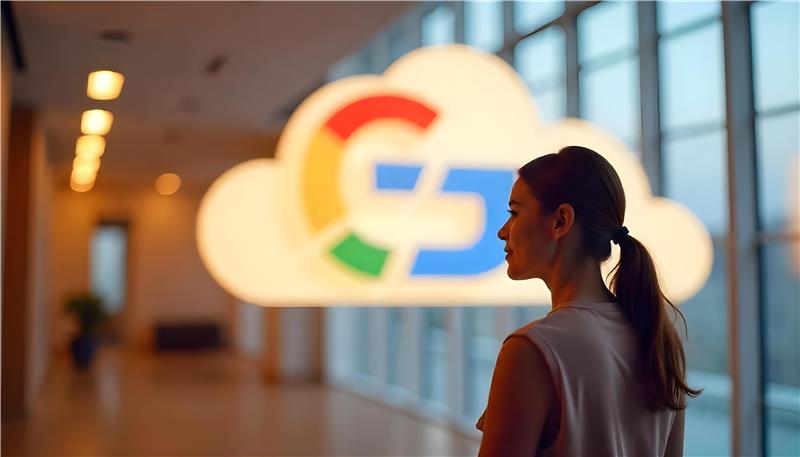
Chirpn is a certified Google Cloud Partner, with access to Vertex AI and Google Agent Assist, offering the same infrastructure depth (as described in the foundation layer above) to businesses which may not have enterprise IT budgets. The Anvi Exim engagement mentioned above is a perfect example of this creating AI native infrastructure first and then, the orchestration and governance layers mentioned in this guide.
Conclusion
The 5 top AI, Machine Learning & IT trends every business should watch in 2026 is not the list to remember it's the structure to plan around, and is sharing a larger set of artificial intelligence trends and digital transformation trends to help businesses compete this year build the right AI infrastructure, orchestrate specialized systems to work together, and secure all of it as adoption accelerates. The businesses that want to do that, and not any trend because it is getting the attention they want, are the ones that are set up for success.
These IT trends in exploration and technology will no longer be "what if" scenarios in 2026, but rather standard practice. The companies that take this year's list as a roadmap, rather than a trend report to skim, will really have an edge when the next year's list comes out because it compounds the foundation, orchestration and security sequencing. A business that creates a strong AI foundation this year is the one that has a strong chance of easily following this year's business trends of orchestration and security in next year.
Frequently Asked Questions
Which are the top AI technology trends for companies in 2026?
The most prominent trends for the year 2026 involve AI-native development platforms, multiagent systems, domain-specific language models, physical AI, and preemptive cybersecurity, all of which revolve around constructing AI infrastructure, managing AI systems, and safeguarding them.
What is the difference between traditional automation and intelligent automation?
Traditional automation is based on strict and preprogrammed rules. Through intelligent automation, and especially by means of multiagent systems, situations can be analyzed, decisions made, and multiple tasks and systems coordinated – these are decisions made in response to the situation, and not some predetermined script.
Why is AI security gaining more importance in 2026?
The AI in business is shifting from experimental to standard practice. The number of AI tools and models in use across an organization may grow rapidly in an uncoordinated fashion. It's solved by preemptive cybersecurity and specialized AI security platforms which provide businesses with visibility and control prior to the exploitation of a vulnerability.
How does a business without a big IT team react to these trends?
Even the most infrastructure-intensive business technology trends have been made accessible to even the most DIY-minded by the advent of cloud-based AI infrastructure and special development partners. A business does not have to have the infrastructure of AI supercomputing, they just need to have a partner that has access to the systems, and can configure them.
Which of these trends should a mid-size business do first?
Most of the mid-sized businesses experience the best ROI when they begin with AI-native development platforms or domain-specific models applied to one well-defined function and grow towards multiagent orchestration or more complex security platforms following the same pattern of sequential growth that this guide suggests.